
Gulf County 24-Hour Release Records
No official Gulf County page labeled as a 24-hour release list was found in the county, sheriff, state county-jail directory, or sheriff-app review. The Gulf County Detention Facility page supplies contact details, but it does not publish a live roster or a recent-release screen. That absence matters. It means there is no supported online window, update time, or same-day field set to quote as a Gulf County Sheriff product.
A person can leave the jail after bond, recognizance, time served, sentence completion, dismissal, or another court-authorized event. A transfer can also remove a person from local custody. Transfer to the Florida Department of Corrections, another county, a federal agency, or another legal hold is not a return to the community. The jail record should identify the event and the next custodian when that information is public.
The Florida county-jail directory shows Gulf County's address and telephone number without an inmate-search link.
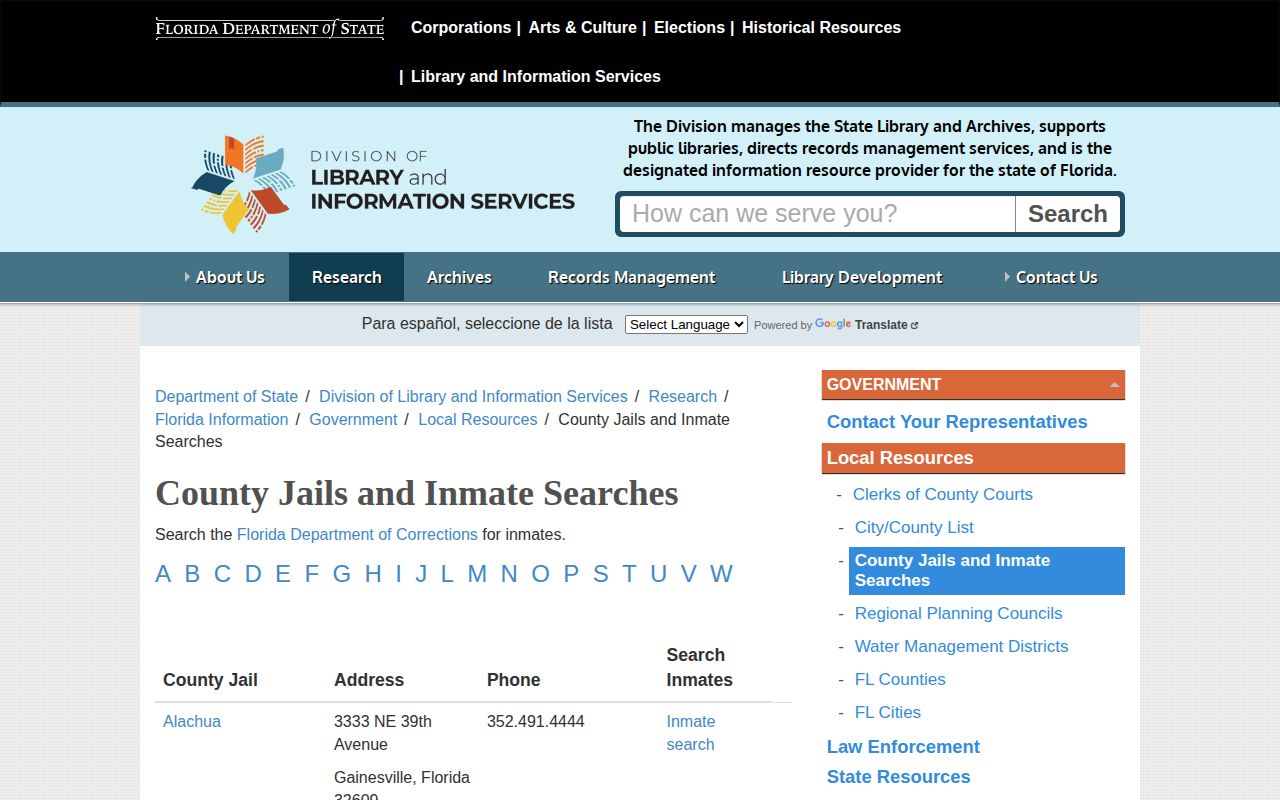
The directory image supports the fallback route: contact the county jail and ask for the maintained release record rather than relying on a nonexistent web feed.
Check Gulf County 24-Hour Releases
A same-day check should use a fixed interval and enough identity data to isolate the right custody episode. Use the person's full name, approximate booking date, date of birth if lawfully known, case number, or booking number. Then ask whether the person remains in Gulf County custody and whether the public record reflects community release or transfer.
- Call the Gulf County Detention Facility at (850) 227-1124. Ask a narrow custody-status question and note that a telephone answer may be only a lead.
- Define the 24-hour period with exact start and end times. Ask whether an existing release log or export covers that span.
- If staff cannot provide the record by phone, send a focused request to GCSO Records for the existing log or the named booking and release entry.
- Search the Gulf County Clerk record systems for bond, release, dismissal, sentence, warrant, or commitment entries.
- If the result says transferred, search the receiving agency. Use FDC for state custody, BOP or federal court sources for a federal matter, and ICE's locator for current immigration detention.
A court docket can explain why release was authorized, but it may not show the moment the person physically left the jail. Conversely, the jail's departure time may not explain every case outcome. Read the two records together. For a broad named-person search beyond today's interval, the Gulf County released inmate search paths connect the county, state, court, and federal systems.
Note: Request the existing record for a precise interval; Florida law does not require an agency to create a new rolling report.
Gulf County Release Fields to Request
Because Gulf County has no public 24-hour release table, the correct field list is a request list, not a claim about a screen. A useful record answers who left, which booking episode ended, when the event occurred, what authority supported it, and whether the person went to the community or another custodian. Ask for these maintained fields, subject to lawful redaction.
| Field | What it can establish |
|---|---|
| Committed name, aliases, birth date | Identity of the person tied to the custody episode |
| Booking number and booking date | The specific jail stay, separate from older or later arrests |
| Release date and time | When Gulf County recorded departure from that jail episode |
| Release method or disposition | Bond, recognizance, time served, sentence completion, dismissal, or another recorded basis |
| Releasing authority | The court or agency connected to the release action |
| Destination or receiving agency | Whether the event was community release or a transfer |
| Charge and case number | A bridge to the matching Gulf County court docket |
Wording is important. “Bonded out” ends the jail hold for that episode while the case continues. “Time served” addresses the custodial term but may not end all supervision or other cases. “Released to FDC,” “released to USMS,” or “transferred” identifies a change of custodian. None of those transfer terms means the person walked free.
GCSO Arrest Posts Are Different
The official GCSO Arrests page is a curated stream of arrest posts. At the research date, entries included a full name, arrest date, charge, an arrest image, and sometimes an originating agency or warrant notation. They did not include a booking number, live-custody flag, bond status, release date, release time, release reason, or destination.
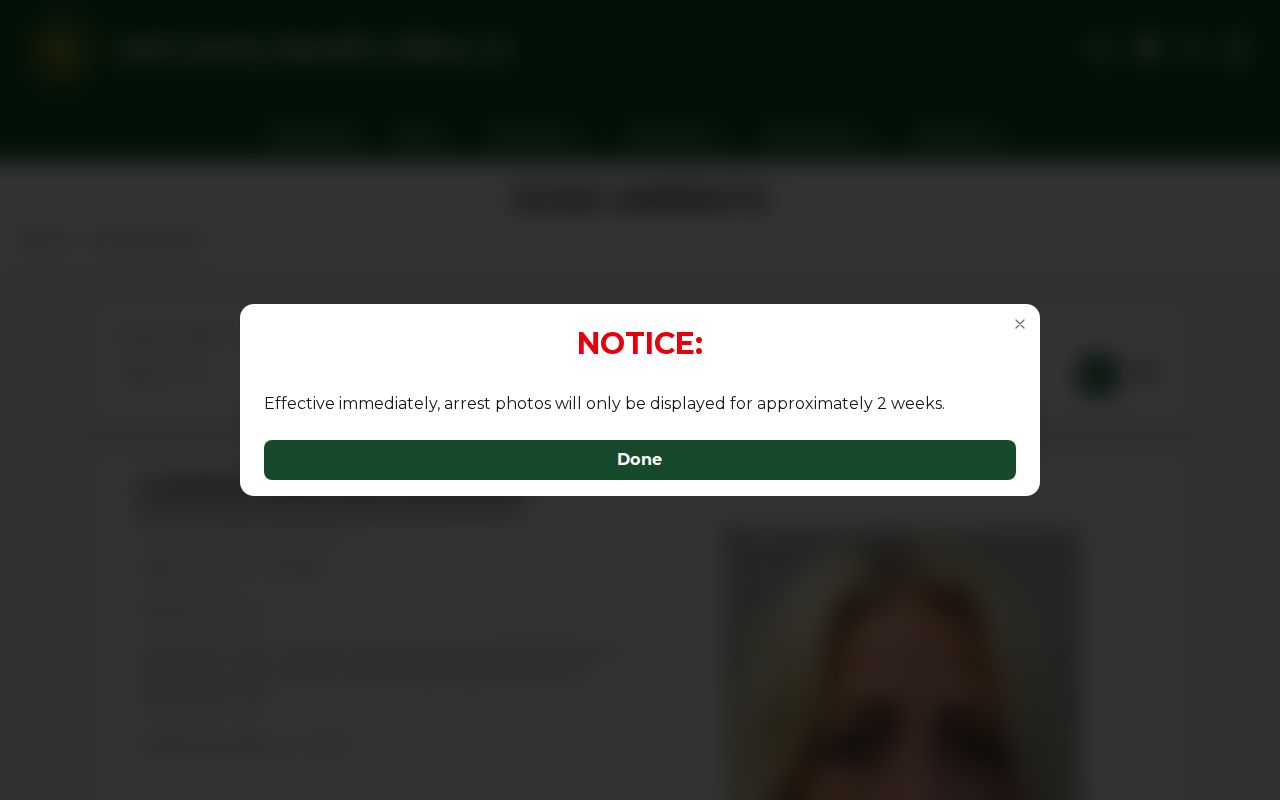
The captured arrest page shows why an arrest post cannot be read as a 24-hour release entry. A post that stays online does not prove continued custody, and a post that disappears does not prove release. GCSO says arrest photos display for about two weeks, but that is a publication choice, not a custody window or records-retention period.
- Arrest post
- A selected public notice about an arrest, not a live release ledger.
- Release record
- The jail's entry documenting departure, method, time, and destination when maintained.
- Transfer
- Movement to a different custodian rather than return to the community.
- Disposition
- The court's recorded outcome for a charge or case.
Gulf County App Custody Limits
GCSO operates official iOS and Android OCV apps. The official iOS listing advertises a search for people incarcerated at the Gulf County Detention Facility and access to a sexual-offender database. It does not advertise a recent-release archive. The Android listing describes the same official sheriff app, but neither listing supplies a rolling 24-hour release view.
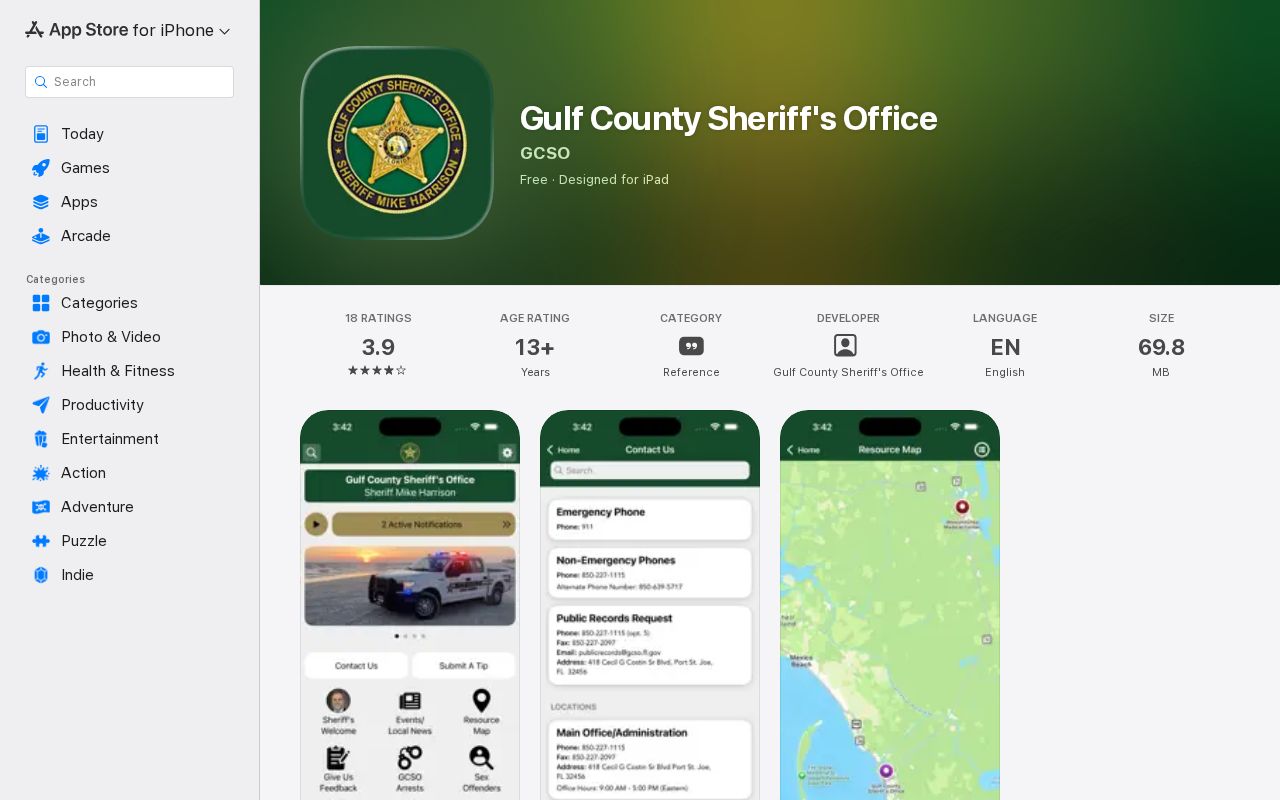
The app image documents a current-custody feature. A person shown as incarcerated should not be counted as released. If a name later vanishes, verify the jail record because disappearance can also reflect transfer, data delay, or an identity mismatch. A current inmate search and a completed-release list answer different questions.
Gulf County Release News Limits
The GCSO Events and Local News page may preserve context for selected arrests, public-safety events, or registrant-address notices. Official social channels may carry similar selected items. Those editorial choices do not create a complete release ledger. Most routine departures will never become a news item.
Use a dated news post only for the facts it states. An arrest image or case update does not establish that the person remained jailed through publication. A registrant notice can describe a narrow statutory status after release, but it does not represent all released people. Same-day confirmation still comes from the jail entry, the court record, or the receiving agency.
Note: Selected GCSO news can add context, but silence on that page has no meaning for a routine Gulf County release.
Gulf County Release Status Paths
GCSO Records accepts public-record requests by phone at (850) 227-1115 option 5, by email at publicrecords@gcso.fl.gov, by fax at (850) 227-2097, by mail, or in person at 418 Cecil G. Costin Sr. Boulevard, Port St. Joe, FL 32456. Public counter hours are Monday through Friday, 9:00 a.m. to 5:00 p.m. Eastern, except holidays. The office reviews fees by request and provides an estimate when needed. Payment comes before record delivery.
Ask for “the existing release log or export from [start timestamp] through [end timestamp], including release date and time, method, authority, and destination or receiving agency, if maintained and public.” If the request concerns one person, add the name, birth date if known, approximate booking date, case number, and booking number. The GCSO public-record request page explains the available channels. Its seven-to-ten-business-day language applies to traffic-crash reports, not to jail-release records, so do not promise that timing for a release entry.
Keep the response with the date and time of the inquiry. If the custodian says no interval log exists, narrow the request to the known booking episode. Ask for the booking sheet, release entry, and destination field as separate existing records if needed. A written response also makes it easier to distinguish “no responsive record” from “record withheld or redacted,” “wrong agency,” and “request needs more detail.” Those outcomes call for different next steps and should not be collapsed into a claim that no release occurred.
FDC's Inmate Release Information Search is the right path only for someone released or scheduled for release from Florida state custody. It expressly excludes people sentenced only to county jail or county probation. VINELink can provide participating-agency notifications, but a no-result is not proof of release. For a wider date range that may cover a weekend, compare the Gulf County 72-Hour Release List process.