
Gulf Detention Release Destinations
Gulf County Detention Facility is the operative local jail in Port St. Joe. It is not Gulf Correctional Institution, which is an FDC state prison in Wewahitchka. The distinction controls where to verify a departure. The county jail owns the local booking and release event. FDC owns a later state-prison admission, movement, or discharge record.
A person may leave the facility after bond, release on recognizance, time served, sentence completion, dismissal, or another court-authorized action. Each can return the person to the community if no other hold remains. The person may instead be transferred to FDC after sentencing, another county on a warrant, a federal custodian, an immigration process, a medical setting, or another legal hold. A county record saying “released to” an agency means Gulf County custody ended. It does not necessarily mean freedom in the community.
| Recorded outcome | Next verification source |
|---|---|
| Bond, recognizance, time served, dismissal | Jail release entry plus Gulf County Clerk docket |
| Transfer to FDC | FDC Population search, then Release search when applicable |
| Transfer to another county | Receiving jail and the warrant or court docket |
| Federal pickup | Federal court, USMS channel, or BOP locator as appropriate |
| Immigration custody | ICE detainee locator and official ICE channel |
Precise language prevents a false release claim. “Bonded out” does not dismiss a charge. “Time served” can end the jail term while another case or supervision continues. “Transferred” identifies a new custodian. The receiving record resolves what happened after the local departure.
Confirm Gulf Detention Releases
The county publishes no official live roster, 24-hour release list, or 72-hour release list located in the research sweep. Confirmation therefore begins with direct facility contact and a focused record request. Use full name, approximate booking date, date of birth if lawfully known, booking number, case number, and charge to isolate the correct episode.
- Call the jail at (850) 227-1124 and ask whether the person remains in Gulf County custody.
- If not, ask whether the public record reflects community release or transfer to another agency.
- Request the booking sheet and release entry, including date, time, method, releasing authority, and destination if maintained and public.
- Search the Gulf County Clerk criminal docket for the related bond order, disposition, sentence, dismissal, warrant, or FDC commitment.
- Follow any transfer in the receiving agency's official system.
A telephone response may be limited and should be treated as a lead unless a record is supplied. A court order can authorize release before the jail completes processing. The clerk file may explain why release was allowed, but the jail entry supplies the physical departure time. For a person whose custody route is unclear, the Gulf County released inmate search lays out the county, state, supervision, and federal paths.
Note: Match every response to one booking episode because the same person can have several Gulf County cases and custody periods.
Gulf Detention Release Record Fields
A useful request asks for existing records rather than a new explanation. The release record should identify the person, the custody episode, the time and method of departure, and any receiving agency. Not every maintained field must be public, and the custodian applies lawful redactions.
| Field | What it shows |
|---|---|
| Name, aliases, birth date | Identity tied to the jail episode |
| Booking number and date | The specific period of Gulf County custody |
| Charge and case number | Connection to the matching court file |
| Release date and time | When the local jail recorded departure |
| Method or disposition | Bond, time served, dismissal, transfer, or other recorded basis |
| Releasing authority | Court or agency linked to the action |
| Destination or receiving agency | Community departure or the next custodian |
Florida's GS2 retention schedule sets a minimum of one anniversary year after release for Booking Records and Commitment and Release Lists. That is a minimum retention rule, not an online-display promise and not proof that Gulf maintains every sample field in one export. A pending request, audit, litigation hold, or another schedule can also affect retention.
Under Florida Chapter 119, the agency provides access to existing public records subject to exemptions. It does not have to create a custom report or research a biography. Ask for the record in its native electronic format when possible because that can preserve column names and timestamps.
Gulf Detention Records Contact
The facility handles immediate custody questions and can route a request. GCSO Records supplies the more specific sheriff public-record channel. The two offices have different street addresses, so they should not be merged in correspondence.
Gulf County Detention Facility1000 Cecil G. Costin Sr. Boulevard
Port St. Joe, FL 32456
Phone: (850) 227-1124
Fax: (850) 564-7508
Email: gulfcountyjail@gulfcounty-fl.gov
Records-counter hours and a fixed fee schedule were not located; call first. GCSO Records
418 Cecil G. Costin Sr. Boulevard
Port St. Joe, FL 32456
Phone: (850) 227-1115 option 5
Fax: (850) 227-2097
Email: publicrecords@gcso.fl.gov
Monday through Friday, 9:00 a.m. to 5:00 p.m. Eastern, except holidays
The official GCSO records page says fees are assessed after review and an estimate is given when required. Payment precedes production. Its seven-to-ten-business-day statement is for traffic-crash reports, not a general jail release-record deadline. Florida law instead uses prompt access within a reasonable time under reasonable conditions.
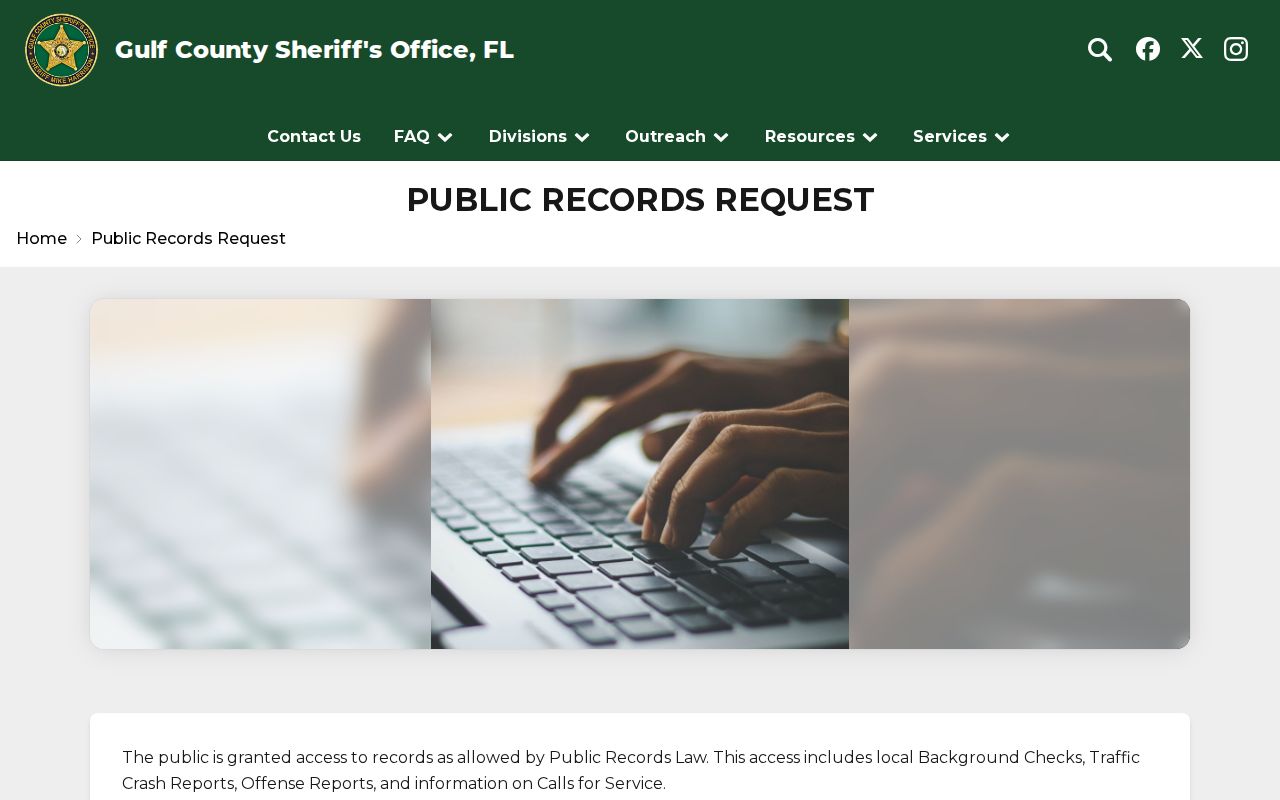
The captured request page confirms the channels, hours, and estimate-based fee process. Keep the request narrow, and set a cost ceiling if extensive work may be involved.
Gulf Detention Court Confirmation
The Gulf County Clerk record search is the durable local source after a short jail event. Search by case number when possible. Otherwise use the party name, then verify the charge, court division, and date. Read each count and case separately because one arrest can produce several matters.
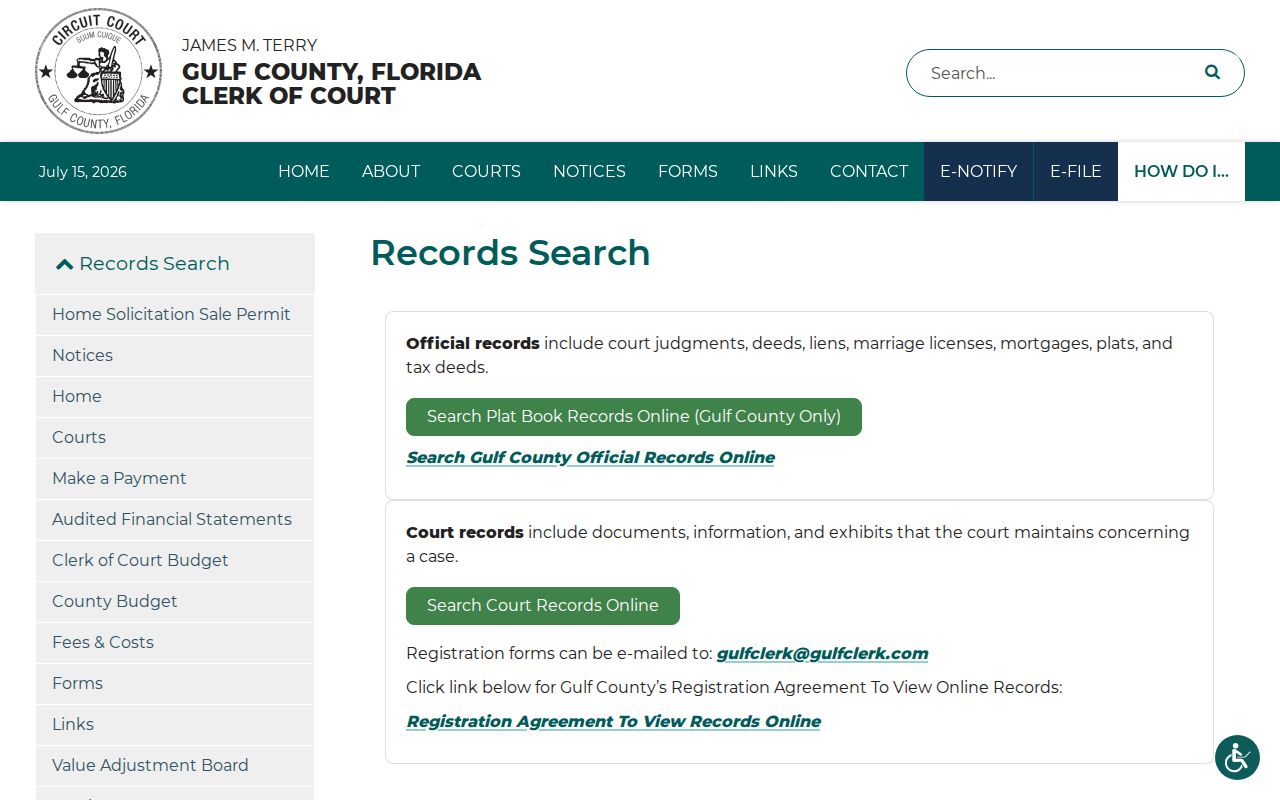
The clerk screen supplies court-record choices, not the jail's release timestamp. Relevant events include bond or pretrial release, dismissal, plea, judgment and sentence, jail credit, time served, probation, FDC commitment, warrants, violations, and later sentence changes. A court-authorized event should be paired with the detention record when the actual departure matters.
The Port St. Joe clerk office is in Room 148 at the same 1000 Cecil G. Costin Sr. Boulevard government address. It lists (850) 229-6112 and (850) 639-5068, weekdays from 9:00 a.m. to 5:00 p.m. Eastern. Extension 2305 handles misdemeanor, criminal traffic, and juvenile matters; extension 2310 handles felonies and appeals. These are court contacts, not the jail operational-record custodian.
Gulf Detention App Limits
GCSO publishes a curated Arrests page and official OCV apps. The arrest page can show a name, arrest date, charge, selected image, and sometimes an originating agency. It omits live custody status, release date, release time, release reason, and destination. GCSO says photos display for about two weeks, which is a web-publication choice rather than a custody or retention period.
The official app listing advertises a search for people incarcerated at Gulf County Detention Facility. It does not advertise a recent-release archive. A current-inmate result and a completed-release record answer opposite questions. If a name disappears from the app, verify the jail record because the change can also reflect transfer or data delay.
The official arrest-post surface illustrates the limitation.
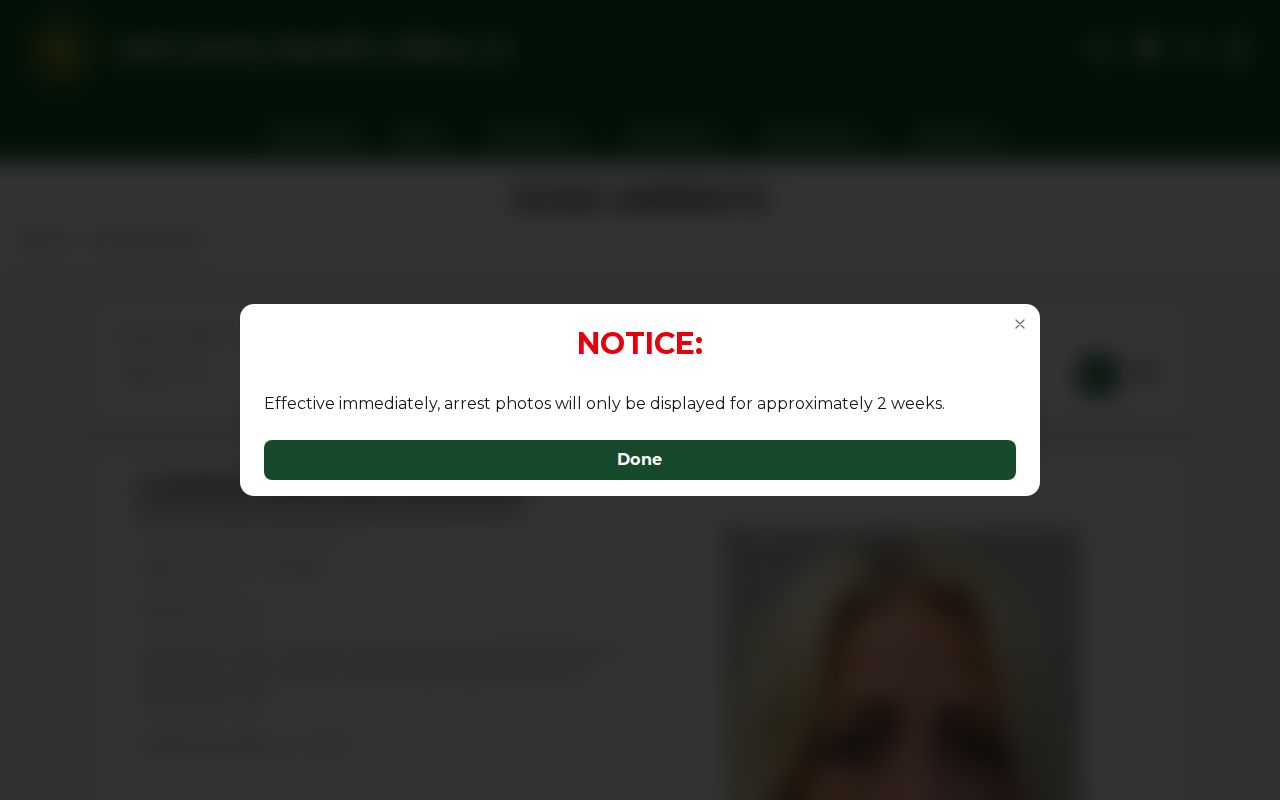
The image shows why an arrest post cannot certify release. It is useful for identifying a possible booking episode, then the jail and court records must supply status and outcome.
Gulf Detention Renovation Record Limits
The official county detention page highlights recent renovations and displays a facility gallery. It does not publish the renovation scope, completion date, or any effect on release processing, public records, capacity, or data systems.
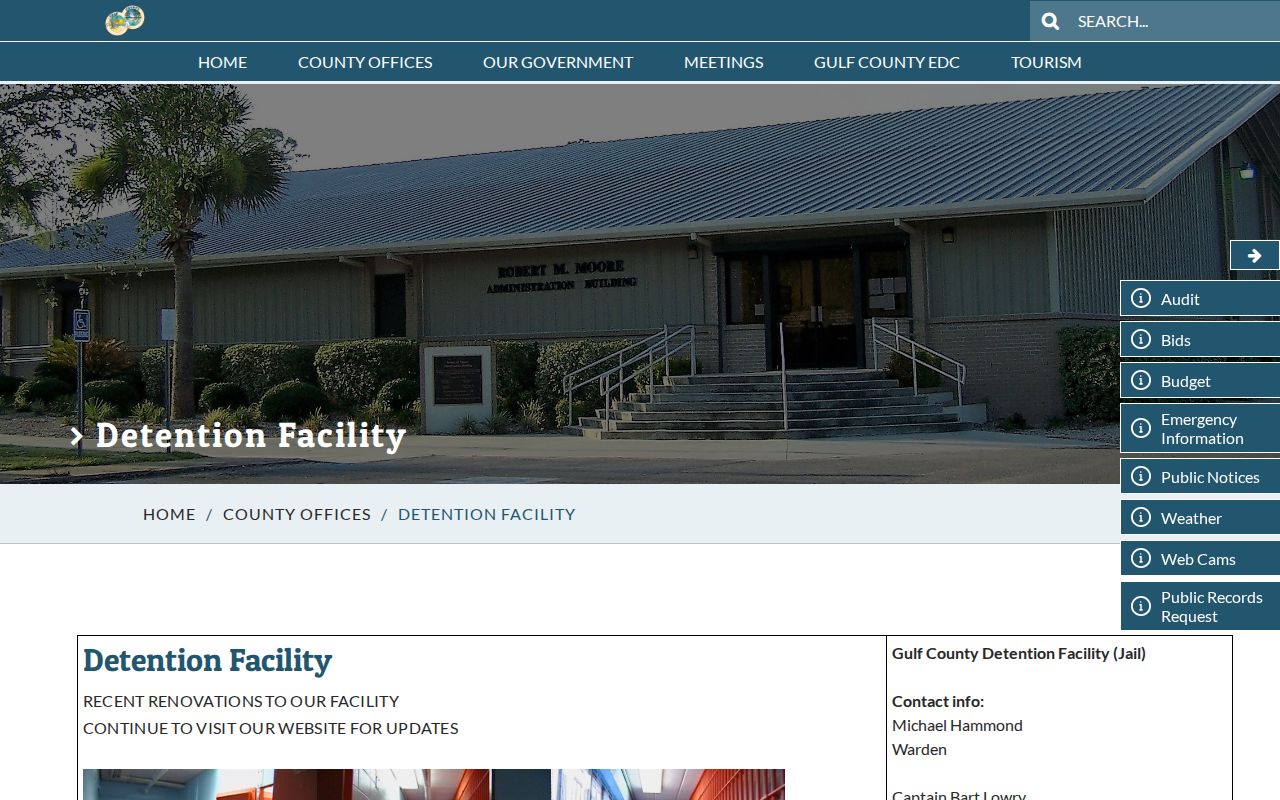
The captured page supports the facility identity and contact route. It does not support a claim that releases use new software, occur at a certain time, or leave through a certain door. Those logistics were not published and should be confirmed directly when needed.
The local name also matters. Gulf Correctional Institution, Gulf Correctional Institution Annex, and Gulf Forestry Camp belong to the state system or its historical complex. An old facility label cannot establish current custody. For a transfer into FDC, search the person's DC number in the statewide population database instead of treating the change as release to the community.
Use the record's facility name and date together. A current Gulf County Detention Facility booking belongs to the county route, while an FDC location belongs to the state route. When the two records meet at a transfer, the county release entry should identify the handoff and the FDC population record should confirm receipt or current location.
Note: Facility renovations are verified local context, but they do not establish a new Gulf County release policy or online feed.