
Gulf County Mugshot Records
A booking photograph, often called a mugshot, is an image created during the arrest and booking process. It belongs to that custody episode. Release later ends or changes custody, but it does not rewrite the image into proof of guilt, conviction, supervision, or present status. The jail release entry and court docket must answer those separate questions.
Florida Chapter 119 governs access to public records while preserving statutory exemptions and redactions. Web publication is a different choice from record retention. GCSO may remove an image from a short public display while retaining an agency record according to the applicable schedule. Florida's GS2 schedule gives Booking Records and Commitment and Release Lists a minimum retention of one anniversary year after release, but that does not promise online access for that period.
County, state, and registry images also have different scopes. GCSO creates or receives the county arrest image. FDC detail pages display an FDC identification photograph for people in its state-prison system. FDLE registry photos cover only people subject to a registration law. Label the agency and record type whenever an image is saved or cited.
Gulf County Mugshot Source Channels
Several channels may expose a photo after a Gulf County release, but none is a complete gallery of all released people. Start with the agency tied to the booking. Use the release record as a separate status source, even when the photo appears beside a name.
| Channel | Has a photo? | How to access it |
|---|---|---|
| GCSO Arrests | Yes, for selected recent arrest posts | Search the official arrest-post page and match date and charge |
| GCSO app | Not established for released records | Listing advertises a current incarcerated-person search; inspect the live result |
| GCSO records request | Potentially, if held and public | Request the existing electronic booking image for an identified episode |
| FDC offender detail | Yes, for covered state records | Search by DC number or name and label it as an FDC photo |
| FDLE registries | Yes, for narrow statutory groups | Use the official registry and do not generalize to all released people |
| Official news or social posts | Sometimes | Use only the facts and date stated in the selected post |
| Third-party copies | Sometimes | Treat only as a lead; return to the government record for context |
VINELink may carry a participating agency's custody record, but the Gulf research did not establish a stable Florida released result with a guaranteed photo field. Do not promise a mugshot there. Local news may reproduce an agency image for a selected event, while unofficial aggregators may keep an old image after official material changes. Neither source certifies release.
For the official county image and its short display context, compare the Gulf County 24-Hour Release List limits. That release page explains why GCSO arrest posts are not a same-day departure feed.
Gulf County Mugshot Display Period
The GCSO Arrests page says arrest photos display for approximately two weeks. This is Gulf County's clearest official county photo source, but the post is about an arrest. Typical entries show a name, arrest date, charge, image, and sometimes an originating agency or warrant note. They omit release date, release time, method, destination, and live custody status.
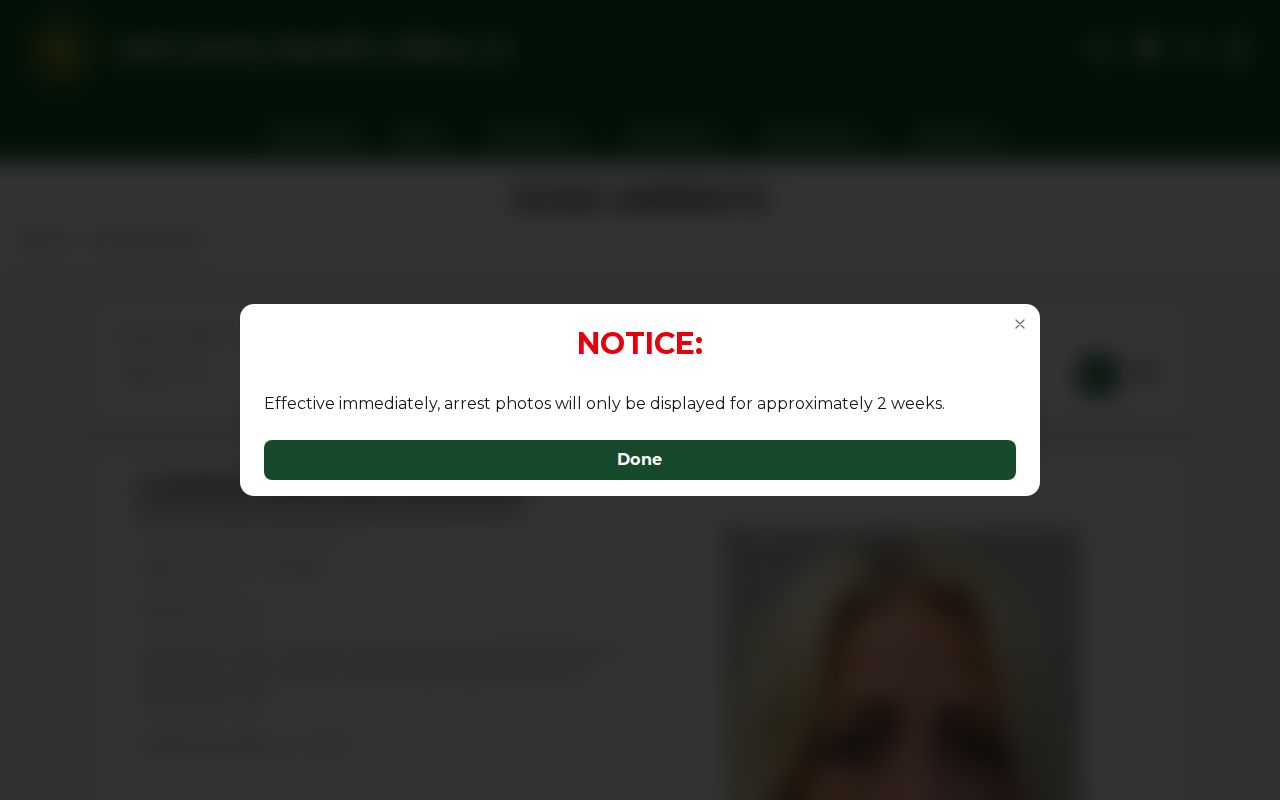
The captured GCSO page documents the arrest-photo surface and its limits. An image still visible near the end of that period does not prove the person remains incarcerated. Its disappearance does not prove release or record destruction. Ask GCSO for the underlying booking image and release entry when the web post is gone.
Note: GCSO's approximate two-week display is not a release window and does not set the agency's legal records-retention period.
Request Gulf County Booking Photos
A focused public-record request is the best official route when the arrest post has expired or the relevant booking never appeared there. Identify the exact episode. Ask for the existing electronic booking photograph, not a new portrait, explanation, or custom report. Request the release record separately if custody status must also be confirmed.
- Gather the person's full name, date of birth if lawfully known, approximate arrest and booking dates, booking number, charge, and case number.
- Open the GCSO public-record request page and choose phone, email, fax, mail, or in-person delivery.
- Ask for “the existing electronic booking photograph for the identified Gulf County Detention Facility booking, subject to lawful redaction.”
- Ask for an estimate before production. GCSO publishes no fixed booking-photo fee and evaluates charges for each request.
- Keep the agency response with the image so its source, booking date, and limits remain clear.
GCSO Records can be reached at (850) 227-1115 option 5, publicrecords@gcso.fl.gov, or fax (850) 227-2097. The office is at 418 Cecil G. Costin Sr. Boulevard, Port St. Joe, FL 32456, and lists weekday hours from 9:00 a.m. to 5:00 p.m. Eastern except holidays. Payment precedes production when a fee applies.
The site's statement about seven to ten business days concerns traffic-crash reports. It does not establish a booking-photo turnaround. Florida public-record law generally grants access to existing agency records, subject to exemptions; it does not require GCSO to build a released-person photo archive.
Gulf County Mugshot App Limits
GCSO offers official OCV apps for iOS and Android. The iOS app listing advertises a search for people incarcerated at the county detention facility and a sexual-offender database. The listing does not establish that the app displays booking images, and it does not advertise a released-person photo archive.
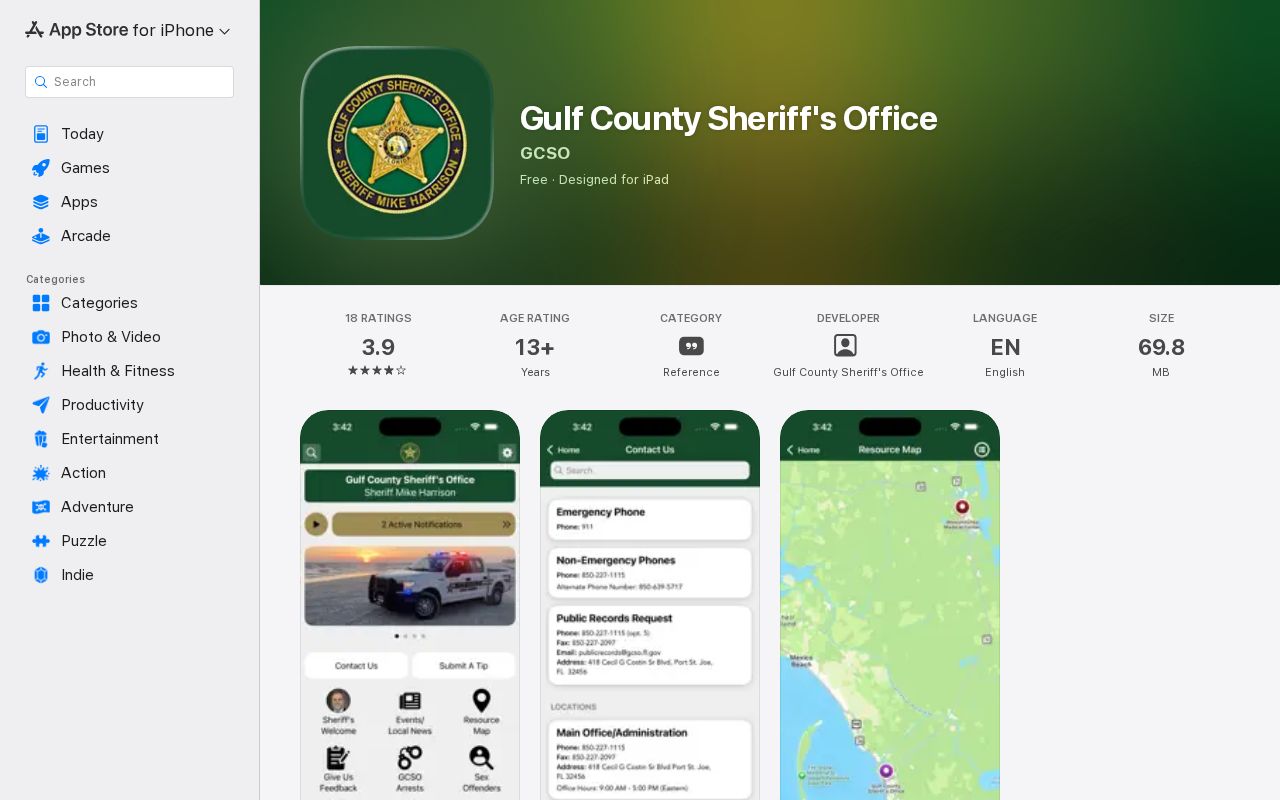
The image confirms the current-inmate orientation. Inspect the live app before saying a result includes a photo. If an incarcerated-person result later vanishes, do not call that a release. It may reflect transfer, an update delay, a changed name match, or another data issue. The jail record remains the status source.
Official social accounts can reproduce selected GCSO photos, yet they do not form a complete archive. They may emphasize major arrests, wanted-person notices, or public-safety events. A repost can survive after the arrest feed's short display ends. Preserve the original date and wording so an old post is not mistaken for a current status report.
Gulf County Mugshot News Context
The GCSO Events and Local News page is an official local-government surface for selected arrest images and registrant-address notices. It can preserve useful context beyond the approximate two-week arrest-photo display. Coverage is editorial and incomplete, though. Most routine bookings and releases will never appear there.
Local press may also reproduce a law-enforcement image when reporting a news event. Such coverage should be read with its date, source label, and stated allegations or court outcome. A photograph in a news story cannot show whether the person is now held, released, transferred, acquitted, or under supervision. Check the originating agency and clerk docket for those facts.
Third-party photo and roster pages are less reliable. They can omit release, merge people with similar names, retain an outdated image, or remove agency context. No commercial mugshot or data-broker link is needed to confirm an official Gulf County record. Use any unofficial copy only to identify a possible source, then return to GCSO, the clerk, FDC, or FDLE.
Note: News selection explains why some Gulf County images persist online while many equally valid booking records never receive public coverage.
Gulf County State Photo Records
Someone transferred from the Gulf County jail to Florida state prison enters a different record system. FDC's Inmate Population and Inmate Release detail pages can display an FDC identification photograph. That image may have been taken by FDC and is not necessarily the earlier Gulf County booking photo. Search with the six-character DC number when possible and compare identity fields.
The FDC Inmate Release Information Search accepts last name, first name, or DC number, plus alias and photo controls. It covers people released or scheduled for release from FDC and excludes county-jail-only cases. FDC says the release data update nightly.
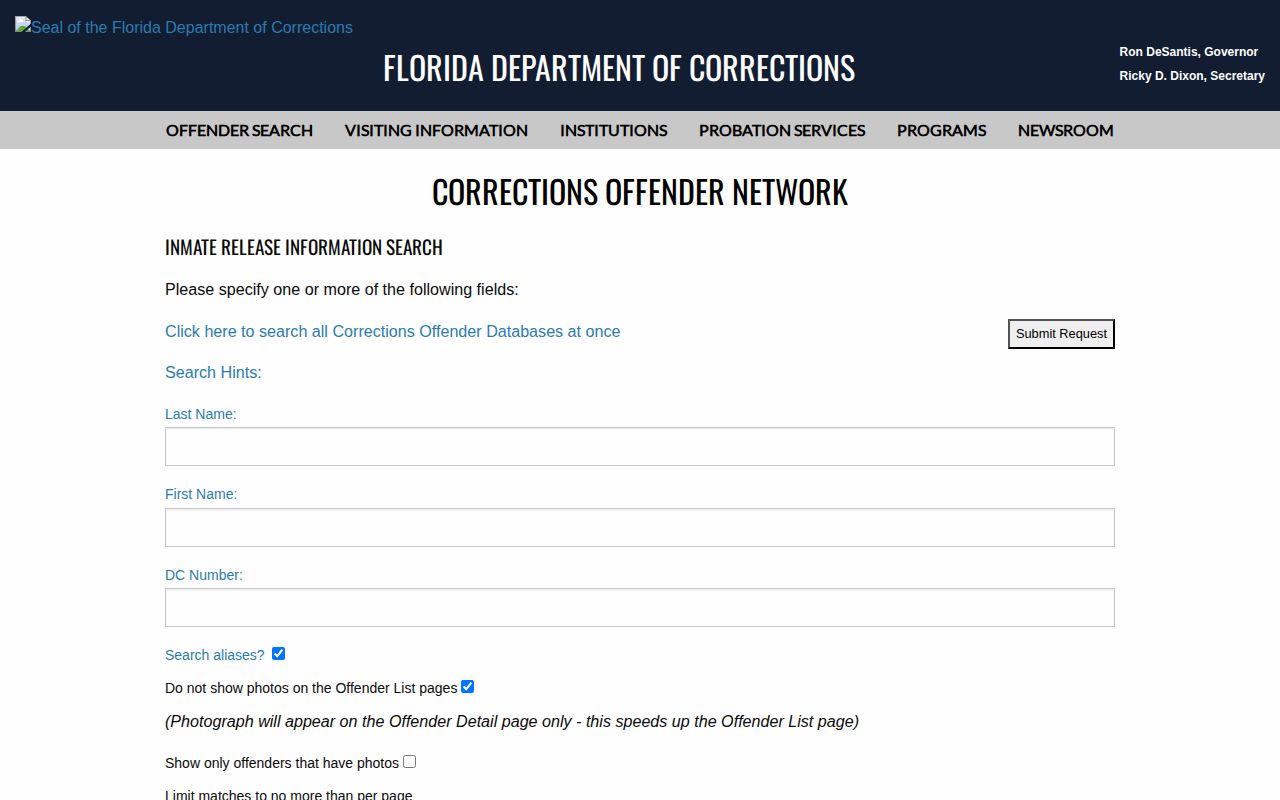
The screenshot shows the official FDC release-search fields and photo choices. A matching state result establishes an FDC record, not the source of the Gulf County arrest photo. Use the FDC release detail for state custody dates and the jail request for the local booking image.
The GCSO embedded FDLE offender map is a genuinely released-first channel for a narrow statutory population. It can show FDLE-hosted photos and labels such as released subject to registration or supervised by FDC. It is not a general Gulf County released-inmate database and should never be used to infer that an absent person has no release record.
Gulf County Mugshot Access Changes
Florida Statutes section 901.43 governs covered commercial booking-photograph publishers. A covered publisher may not solicit or accept payment to remove a photograph. A qualifying written request must identify the image, and the law provides a removal period and civil remedies. It is not a blanket rule that erases government records or ordinary news.
Sealing and expungement follow a separate Florida process. A sealing order limits public access to an eligible record, while expungement directs treatment under the governing statutes and order. Neither term should be reduced to a claim that an arrest never happened. The FDLE Seal and Expunge Process provides the statewide certificate and eligibility route.
If an official source shows material that conflicts with a sealing or expungement order, contact the agency that controls the record and provide the order or case information it requests. For a news copy, contact that publisher directly. Do not pay a service merely because it promises broad removal that it cannot control.